HEOS App Redesign
A more native music app streaming experience on HEOS
Multi-room Audio
Service
Professional
Project type
Mobile
Platform
B2C
Audience
Overview
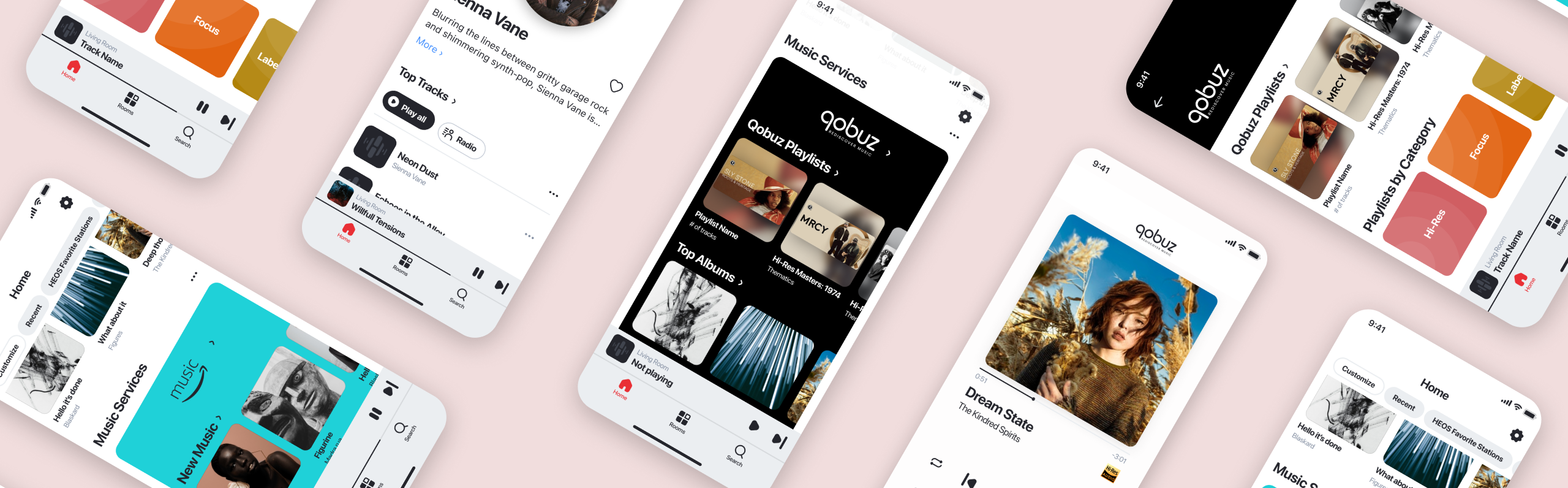
Upgrading the music streaming experience in the HEOS app allows users to enjoy music as if they were using the native service, making everyday listening feel familiar and effortless.
The HEOS 3.0 redesign focuses on improving core playback controls, multi-room management, and creating a music streaming experience that feels closer to native music service apps.
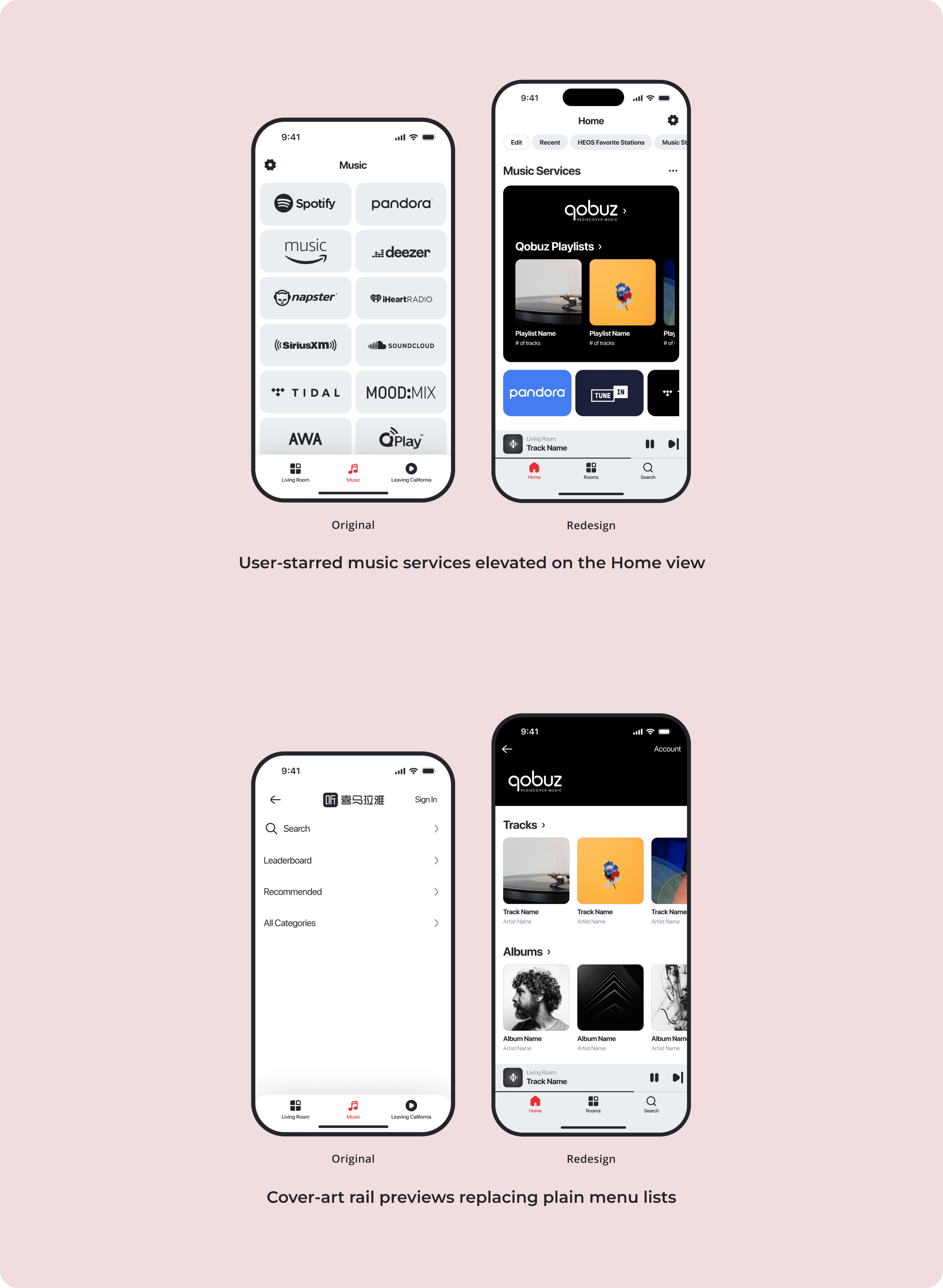
To support this, the HEOS app stays closer to native app patterns by incorporating each service’s brand colors, logos, and familiar browsing structures, helping reduce friction and cognitive load when switching between services.
This project focused on defining a reusable music streaming framework so every music service integrated into HEOS feels both familiar and consistent.
Problem
The previous HEOS design relied heavily on plain list-based layouts without music service branding such as logos or colors, making browsing feel disconnected from the experiences users are familiar with in native music apps.
As streaming platforms continue to evolve, the old design can no longer keep up with current trends or effectively present curated feeds and new content, limiting how users discover and engage with music.
Highlights
Reusable templates across services
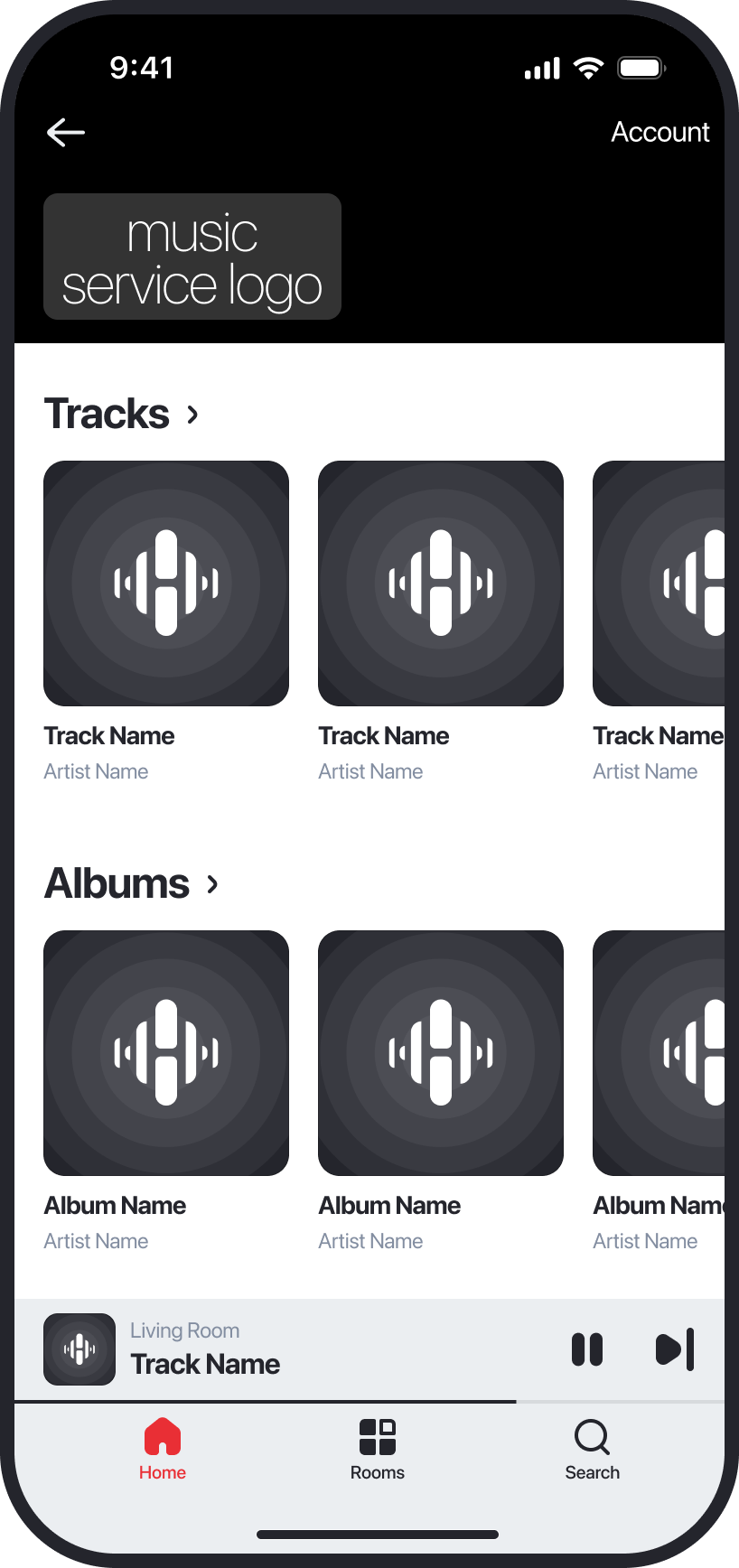
- Shared templates across content categories and music services
- Reduces relearning when switching services
- Simplifies introduction of new music services
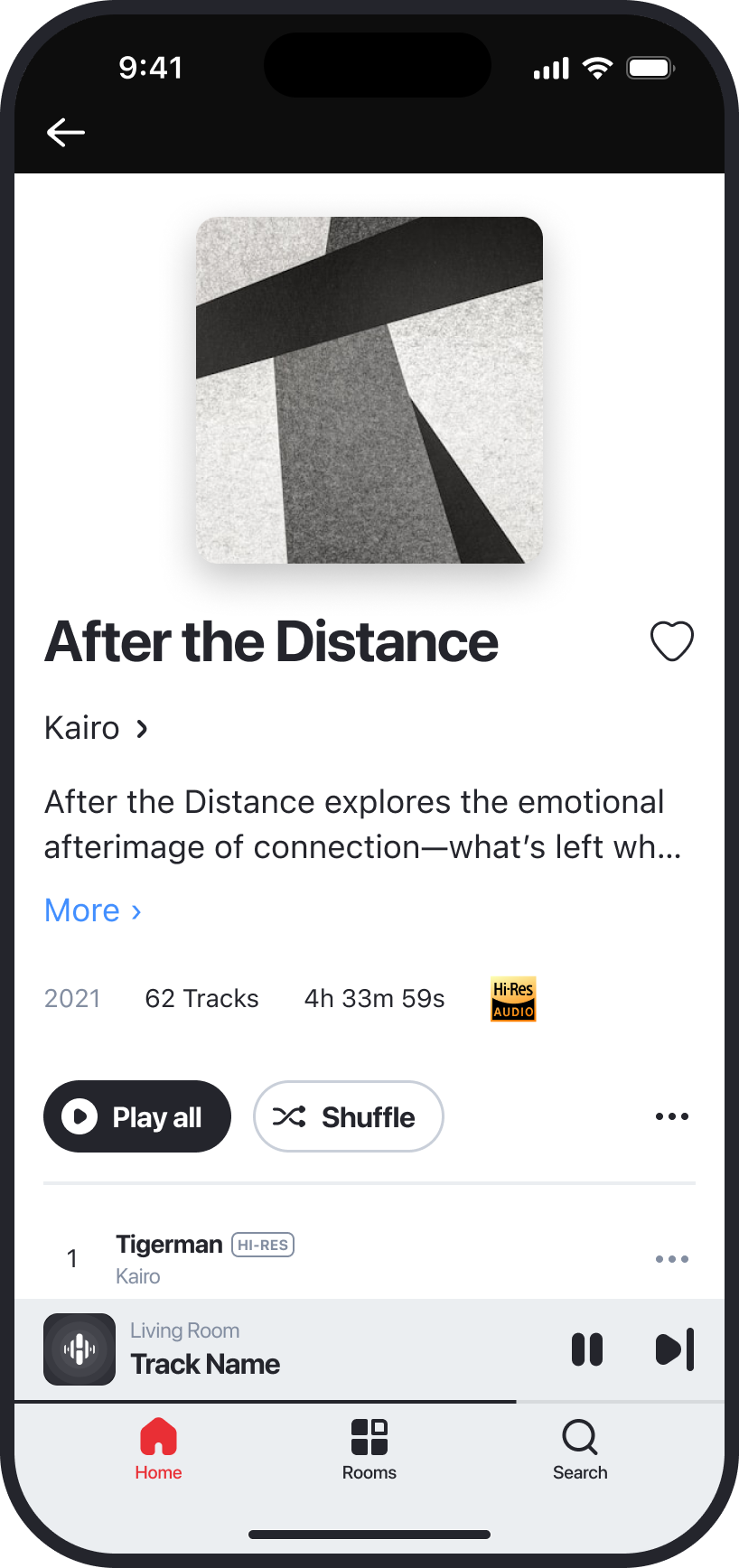
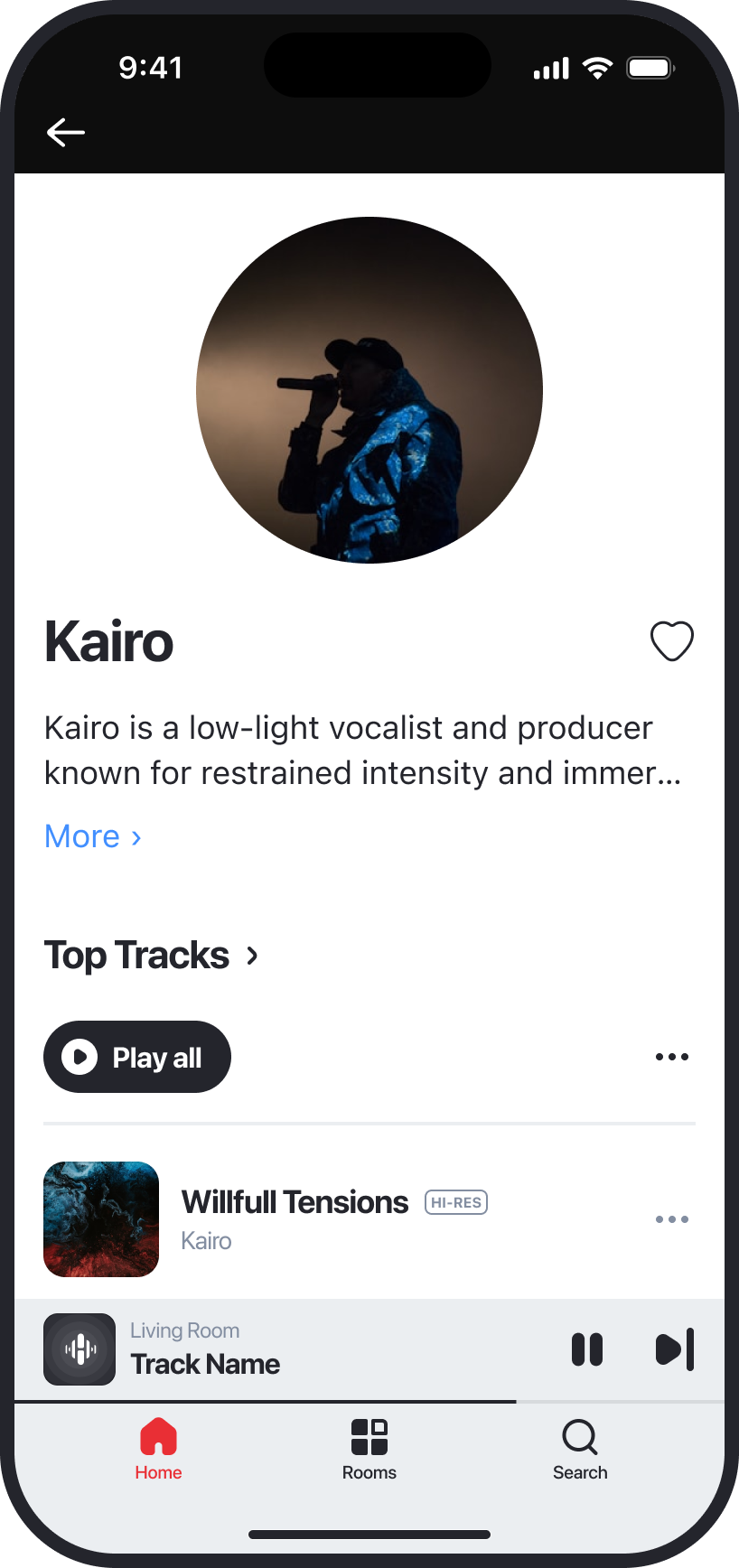
Album and artist details at a glance
- Key details of artists, albums, and playlists visible without deeper navigation
- Applicable to all container types with key metadata
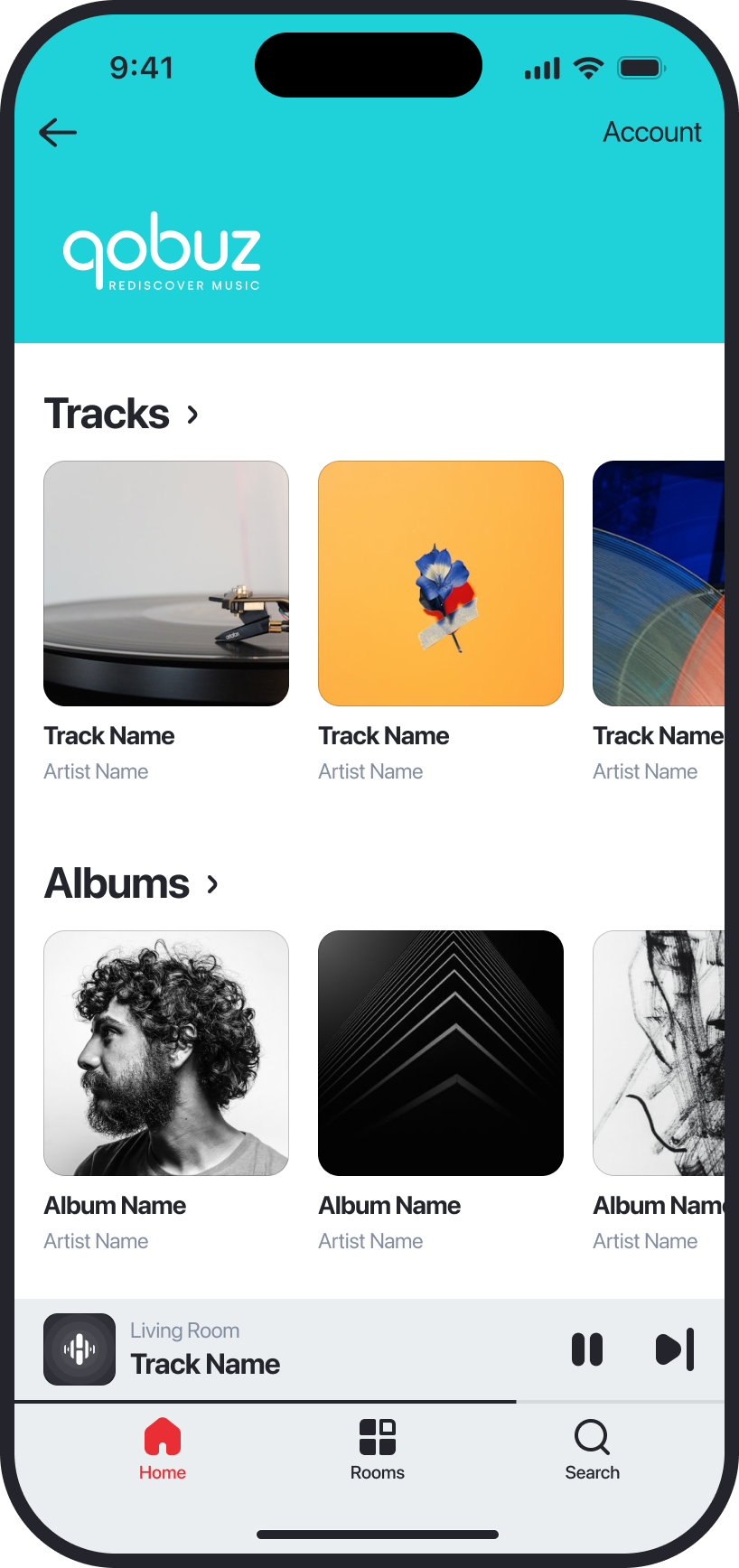
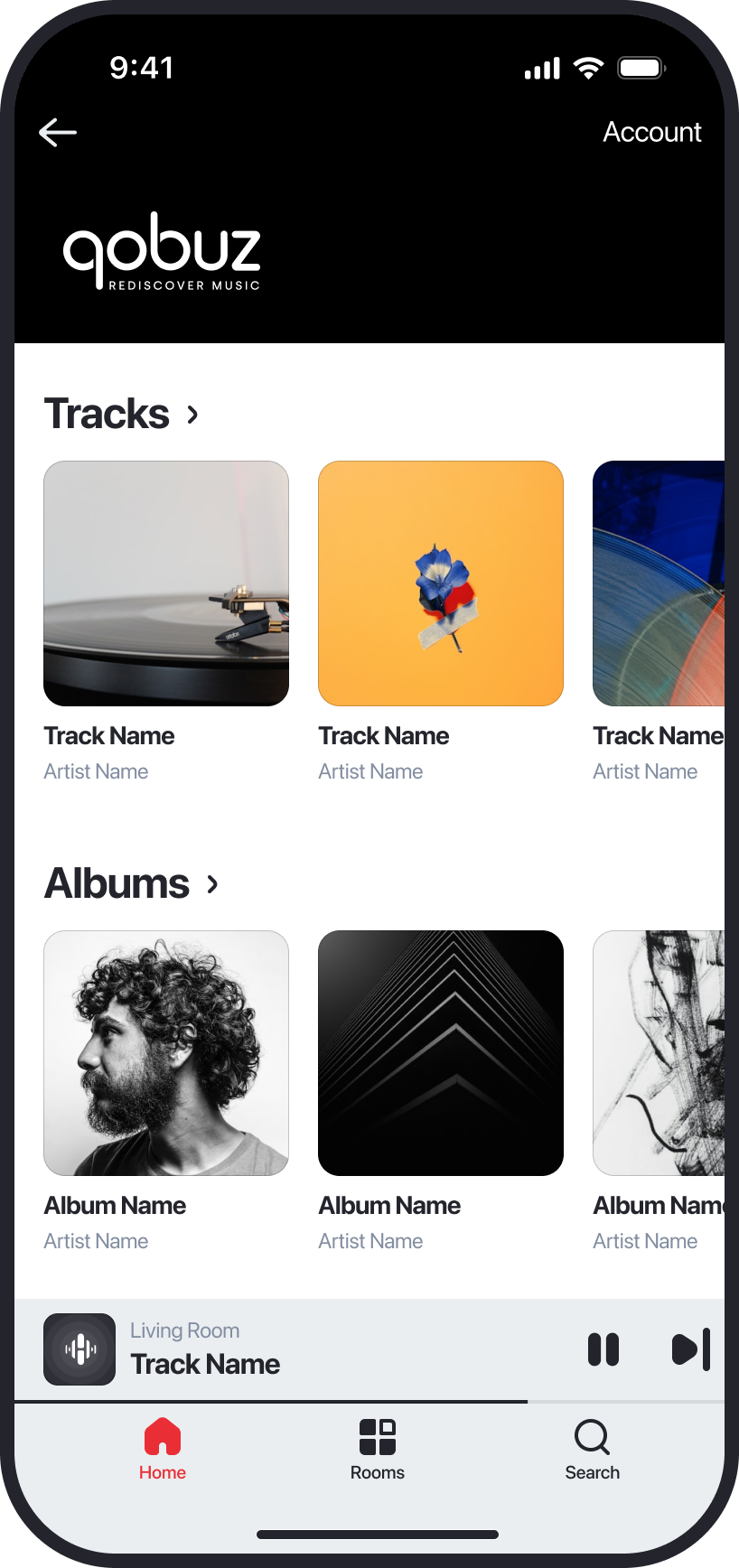
Stronger visual expression for each service
- Tailored visual design using service brand colors to reinforce familiarity
- Elevated music service logos to strengthen recognition and recall
Evolution
Impact
Ending
As the designer on this HEOS project, I was responsible for defining the problem space, synthesizing insights, and translating them into clear design decisions. I focused on balancing system complexity with everyday usability, making sure the experience could scale while still feeling approachable for different types of users.
This project pushed me to think more critically about information hierarchy, control clarity, and how users move between setup, control, and feedback states. While there is still room to expand and refine additional flows, this work reflects my approach to ownership, iteration, and designing with both technical constraints and real user needs in mind.

HEOS App Redesign
A more native music app streaming experience on HEOS
Multi-room Audio
Service
Professional
Project type
Mobile App
Platform
B2C
Audience
Overview
Upgrading the music streaming experience in the HEOS app allows users to enjoy music as if they were using the native service, making everyday listening feel familiar and effortless.
The HEOS 3.0 redesign focuses on improving core playback controls, multi-room management, and creating a music streaming experience that feels closer to native music service apps.
To support this, the HEOS app stays closer to native app patterns by incorporating each service’s brand colors, logos, and familiar browsing structures, helping reduce friction and cognitive load when switching between services.
This project focused on defining a reusable music streaming framework so every music service integrated into HEOS feels both familiar and consistent.
Problem
The previous HEOS design relied heavily on plain list-based layouts without music service branding such as logos or colors, making browsing feel disconnected from the experiences users are familiar with in native music apps.
As streaming platforms continue to evolve, the old design can no longer keep up with current trends or effectively present curated feeds and new content, limiting how users discover and engage with music.
Highlights
Reusable templates across services
- Shared templates across content categories and music services
- Reduces relearning when switching services
- Simplifies introduction of new music services
Album and artist details at a glance
- Key details of artists, albums, and playlists visible without deeper navigation
- Applicable to all container types with key metadata
Stronger visual expression for each service
- Tailored visual design using service brand colors to reinforce familiarity
- Elevated music service logos to strengthen recognition and recall
Evolution
Impact
Ending
As the designer on this HEOS project, I was responsible for defining the problem space, synthesizing insights, and translating them into clear design decisions. I focused on balancing system complexity with everyday usability, making sure the experience could scale while still feeling approachable for different types of users.
This project pushed me to think more critically about information hierarchy, control clarity, and how users move between setup, control, and feedback states. While there is still room to expand and refine additional flows, this work reflects my approach to ownership, iteration, and designing with both technical constraints and real user needs in mind.

HEOS App Redesign
A more native music app streaming experience on HEOS
Multi-room Audio
Service
Professional
Project type
Mobile App
Platform
B2C
Audience
Overview
Upgrading the music streaming experience in the HEOS app allows users to enjoy music as if they were using the native service, making everyday listening feel familiar and effortless.
The HEOS 3.0 redesign focuses on improving core playback controls, multi-room management, and creating a music streaming experience that feels closer to native music service apps.
To support this, the HEOS app stays closer to native app patterns by incorporating each service’s brand colors, logos, and familiar browsing structures, helping reduce friction and cognitive load when switching between services.
This project focused on defining a reusable music streaming framework so every music service integrated into HEOS feels both familiar and consistent.
Problem
The previous HEOS design relied heavily on plain list-based layouts without music service branding such as logos or colors, making browsing feel disconnected from the experiences users are familiar with in native music apps.
As streaming platforms continue to evolve, the old design can no longer keep up with current trends or effectively present curated feeds and new content, limiting how users discover and engage with music.
Highlights
Reusable templates across services
- Shared templates across content categories and music services
- Reduces relearning when switching services
- Simplifies introduction of new music services
Album and artist details at a glance
- Key details of artists, albums, and playlists visible without deeper navigation
- Applicable to all container types with key metadata
Stronger visual expression for each service
- Tailored visual design using service brand colors to reinforce familiarity
- Elevated music service logos to strengthen recognition and recall
Evolution
Impact
Cross-device Experience
The previous HEOS design relied heavily on plain list-based layouts without music service branding such as logos or colors, making browsing feel disconnected from the experiences users are familiar with in native music apps.
As streaming platforms continue to evolve, the old design can no longer keep up with current trends or effectively present curated feeds and new content, limiting how users discover and engage with music.
Ending
As the designer on this HEOS project, I was responsible for defining the problem space, synthesizing insights, and translating them into clear design decisions. I focused on balancing system complexity with everyday usability, making sure the experience could scale while still feeling approachable for different types of users.
This project pushed me to think more critically about information hierarchy, control clarity, and how users move between setup, control, and feedback states. While there is still room to expand and refine additional flows, this work reflects my approach to ownership, iteration, and designing with both technical constraints and real user needs in mind.